
Preloader

Thinking

Ideas, frameworks and perspectives for what’s next.

Today's Brief Background
Today’s Brief

Today’s key ideas, read to you.

A 10-minute audio edition with insights from top stories.

Now Playing

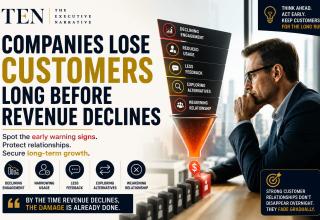
Companies Lose Customers Long Before Revenue Declines

The Warning Signs Appear Earlier Than the NumbersRevenue is often treated as the clearest measure of customer health. When it is growing, companies assume relationships are strong. When it starts falling, leaders begin asking what went wrong.Bu


Every Budget Is a Strategy Document

Where Money Goes Reveals What Leadership BelievesEvery company has a strategy document. It may describe growth, innovation, customer experience, technology, talent or expansion as strategic priorities. But there is another document that often reveals

Information Is Everywhere. Judgment Is Rare.

The Problem Is No Longer InformationExecutives have never had access to more information. Market reports arrive instantly, dashboards update in real time, analysts publish their views, competitors announce their moves and artificial intelligenc

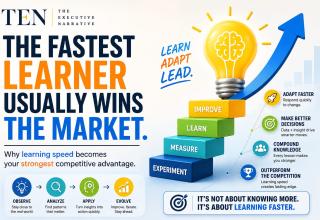
The Fastest Learner Usually Wins the Market

Speed Is Not Always About Moving FirstMarkets often reward companies that move quickly. But speed alone is not necessarily an advantage. A company can launch faster, hire faster and expand faster while still making the same mistakes repeatedly.The de

The CEOs Who Win Think in Second-Order Effects

The Decision Is Only the BeginningBusiness decisions are often judged by their immediate results. A company cuts prices and sales increase. It reduces costs and margins improve. It launches a new product and gains customers. These outcomes are

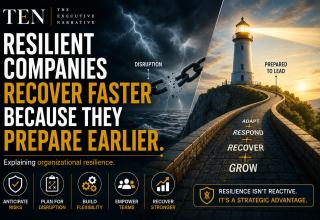
Resilient Companies Recover Faster Because They Prepare Earlier

Resilience Is Built Before the CrisisResilience is often measured by what happens after something goes wrong. How quickly did the company recover? How much revenue was protected? How effectively did leadership respond?But recovery is rarely det

Every Decision Creates a Future Constraint

Every Choice Changes What Comes NextBusiness decisions are often evaluated by what they produce immediately. Did the investment generate returns? Did the product launch on time? Did the new hire fill the role? Did the acquisition increase revenue? Th

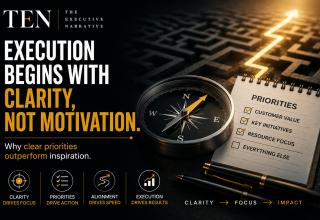
Execution Begins With Clarity, Not Motivation

Motivation Is Not a StrategyCompanies often talk about execution as if the main challenge is getting people to work harder. Leaders launch initiatives, energize teams, communicate ambitious goals and try to create a sense of urgency. But motivation c

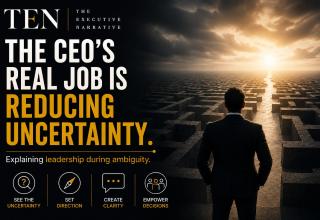
The CEO’s Real Job Is Reducing Uncertainty

Leadership Begins Where Certainty EndsLeadership is often associated with setting direction, making difficult decisions and communicating a compelling vision. But in uncertain environments, the CEO has another critical responsibility: reducing uncert

The Best Companies Change Before They Have To

The Cost of Waiting for CertaintyMost companies do not resist change because they cannot see it coming. They resist because the current model is still working. Revenue is healthy, customers are satisfied and the existing strategy continues to p

Momentum Can Hide Strategic Drift

When Success Becomes a Blind SpotMomentum is one of the most valuable assets a company can build. Revenue is growing, customers are arriving, teams are expanding and the organization appears to be moving in the right direction. Success creates confid

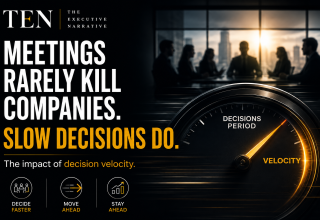
Meetings Rarely Kill Companies. Slow Decisions Do.

The Problem Is Not the Meeting. It Is What Happens After It.Companies spend enormous amounts of time discussing decisions. Meetings are scheduled, presentations are prepared, opinions are exchanged and action items are recorded. Yet many organization

Companies Rarely Outgrow Their Structure

High-growth companies often assume that scaling depends on hiring more talent, expanding into new markets, or investing in technology. Those decisions certainly matter, but they rarely become the first constraint on growth. More often, growth begins

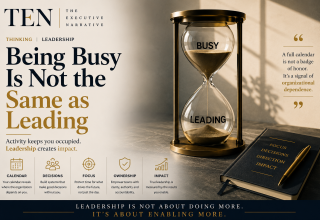
Being Busy Is Not the Same as Leading

Executive calendars have never been fuller. Board meetings, investor updates, customer reviews, operational check-ins, hiring discussions, crisis management and endless streams of communication compete for every available hour. In many organisa

Scaling Magnifies Strengths and Weaknesses

Growth is often celebrated as proof that a company has discovered a winning formula. Higher revenue, larger teams and expanding markets create the impression that the organisation is becoming stronger with every stage of scale.The reality is mo

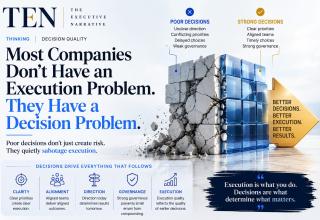
Most Companies Don't Have an Execution Problem. They Have a Decision Problem.

When organisations miss targets, launch products late or struggle to execute strategy, the diagnosis is often predictable. Leaders blame execution. Teams are asked to improve accountability, increase productivity or work with greater urgency. The ass

Every Competitive Advantage Has an Expiry Date

Every successful company eventually discovers a dangerous illusion. The very capability that created its competitive advantage begins to feel permanent. Market leadership reinforces confidence. Financial performance validates past de